Modern Web Design Services Built for Growing Businesses
Modern Web Design Services for Growing Businesses
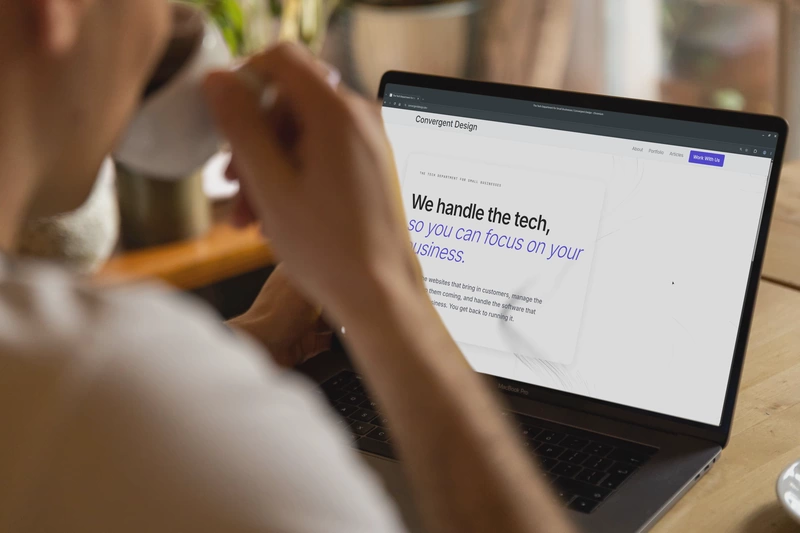
Most business owners don't care about building the perfect website, they just want a website that will get them customers. However, the quality of a website can decide whether it pays for itself, or quietly wastes money. We've watched growing businesses spend real money on sites that look fine, but perform poorly. The difference between those sites and the ones that earn their keep comes down to a few practical decisions, and this article covers the three that matter most: speed, technical quality, and simplicity. Every one of them connects to the same outcome: more visits and more conversions, which means more customers.
Speed Is the First Impression, and First Impressions Sell
Slow pages drive away customers before they understand your product or service. People are not patient online. When a page stalls, they leave, and some of them never come back. They never see your products, your prices, or your contact details. Every wasted second is a sale lost, and a frustrated visitor might tell colleagues about the experience.
Think about the last time a page took forever to load. Did you buy from that company?
The numbers back up that instinct. Google's own research on mobile site speed found that 53% of users will leave a page if it takes longer than three seconds to load. That is more than half of your potential customers walking away before they ever see what you offer. Page speed is not a technical nicety, it is a direct driver of customer acquisition: every second of delay is a measurable loss of visitors, and every lost visitor is a lost sale.
Speed is part of your brand. A site that responds instantly makes your company feel organized and professional. A site that crawls makes people wonder how carefully you run the rest of the business. Directories that rank web design companies make the same point: a memorable website is often the first impression a prospect gets, and great design turns that impression into action.
The work behind fast pages is practical, not mysterious.
- Images are sized for phones and desktops so they load quickly on both.
- Extras that don't serve a purpose get cut, so each page has one clear job.
- The important content shows up first, so visitors see value immediately.
The result is a site that respects a visitor's time. When people can move through your pages without waiting, they learn more, they reach out, and a visitor becomes a customer.
Speed also protects your other marketing. Run a campaign or share a page on social media, and people will click. A fast page turns that click into a useful visit, but a slow page burns the attention you paid to earn. That's why speed is the first thing a good web design team checks.
Speed is not a one-time fix. Content and features grow, and growth tends to slow pages down if nobody is watching. We treat speed as an ongoing concern as your business expands, and that ongoing attention protects the customer experience you worked to build.

Photo by SHVETS production on Pexels
Technical Quality Is How Customers Find You
Customers rarely see the technical work inside a website, but that work may decide whether they find you at all. A well-built site ranks on Google, and a higher ranking means more visits without advertising costs. Free search traffic is one of the most valuable assets a growing business can own, because it keeps generating customers month after month.
The approach is straightforward: the site must be organized so search engines can read it easily. Page titles and descriptions are accurate, headings are clear, and every page has one obvious purpose. When search engines understand your business, they connect you with people already looking for what you sell. Those visitors arrive with a need in mind, which makes them far more likely to become customers.
This matters more than it used to, because search engines are not the only readers anymore. AI search engines answer questions by reading websites, and they only recommend businesses whose sites they can easily understand. A site built for machines to read is a site that gets recommended, and visitors from AI recommendations frequently become customers.
Technical quality also supports trust. Clear menus, sensible page order, and consistent branding help visitors feel guided instead of lost. People are more likely to buy when they can find answers quickly. A well-structured site removes the friction between interest and action.
Using the right tools to accomplish these goals is crucial. We build on lightweight technology for a reason: less code means faster pages, and faster pages mean more customers. We wrote about choosing the right tool over the industry default in our article on htmx versus heavy frameworks, and the same philosophy applies to every site we build.
Photo by Ahmed Lishane on Pexels
A Simple Site Keeps Up With Your Business
Your business will not look the same in two years. You may add a service, change pricing, open a new location, or launch a promotion. Your website has to keep pace, and the way it keeps pace depends on how it was built and who you work with.
Some providers sell a site packed with features that may never be used, as if unused features are a safety net. They are not. When the day comes that you need something new, busy business owners do not want to figure out how to leverage a feature they have never touched. they want a developer who can add what they actually need, quickly. That is the real safety net, and it is why the relationship matters as much as the site.
A complicated site is harder to change, so every adaptation takes longer and costs more. A simple site is easier to change, so when your business pivots, the developer can keep up fast and at a reasonable cost. Simplicity does not make your business adaptable on its own. The relationship keeps your technology adaptable, and simplicity makes each adaptation faster and less expensive. Agility and the cost of keeping up with your pivots are both tied to how simple the site is.
That is why a good provider does not build more than you need today. The focus stays on pages that support your goals, with room to add tools later. Many growing businesses start with a strong website and add search optimization, content updates, or marketing support once the site proves itself. That step-by-step approach keeps costs under control and limits risk.
In practical terms, a simple site handles everyday requests without a full project. Common updates include:
- Changing prices, contact details, or service descriptions.
- Adding a page for a new offering or a special campaign.
- Updating photos, customer stories, or team information.
Quick updates create advantages competitors cannot easily copy. If a rival changes an offer, you can respond in days. If customers request a feature, you can test it right away. If a campaign needs a landing page, you can launch it without waiting for a redesign. In any growing market, the business that moves first often wins the customer.

Photo by Vitaly Gariev on Pexels
The Bottom Line
A website is the cheapest salesperson you will ever hire. It works nights, it never takes a vacation, and it talks to every visitor who shows up. Like any hire, it's worth paying for the good one. A custom website built for speed, technical quality, and simplicity pays for itself in more visits and more conversions, which means more customers. That's the return on value successful companies see, and it's the reason the investment is worth making.
Frequently Asked Questions
Business owners have practical questions before hiring a web design partner. Here are short answers to the most common ones.
What do modern web design services include?
More than making a site look attractive. The best firms combine strategy, user experience design, web development, and search optimization into one process, and some help with local search, including your Google Business Profile. The shared goal is a professional website that earns visibility in search results and turns more visitors into customers.
Why does site speed matter for a growing business?
Speed shapes the first impression customers form about your company. A slow website makes visitors leave before they understand what you offer. Fast pages keep people engaged long enough to explore your services and take action. A memorable website turns a first impression into action, and speed is a large part of being memorable.
Can good technical design bring more traffic without ads?
Yes. A well-built site is organized so search engines can read it and trust it, and the same is true for AI search engines. When machines understand your pages, they show your business in relevant results, and that free traffic builds over time. Many top agencies combine modern web design with search optimization for exactly this reason.
How do I choose a web design partner?
Look for a partner who treats your business like their own. Convergent Design is a father-and-son team that acts as the tech department for small businesses, not a vendor that hands off a project and disappears. We build custom sites on lightweight technology, so you get fast pages, strong security, and a site that search engines and AI readers can understand. We stay involved after launch, managing the ads, content, and automation that keep customers coming back. When you work with us, you get straight answers, owners who follow through, and a partner who cares about the details the way founders do.